

Display ads campaigns or Display banner campaigns
Display Ads are a form of online advertising that use ads that contain copy, images, video, and visual elements in general with a call to action (CTA) that usually links to a website or a landing page. The ads can be static with an image, some animations, or a video. Display ads can help a business to build brand awareness by driving traffic to a website or landing page, but they also can be used to promote products and services. Display ads are commonly know as “banners” and marketers always refer to display ads as a banners ads.
Display Ads are deployed or displayed on different digital websites that are part of a network or display network. One of the biggest networks is the Google Display Network.
From one side of the network, you have the publishers who make available places where the ads can be deployed, like newspapers, magazines, personal blogs, email networks, and most recently, digital TV channels that use OTT (Over The Top devices like Roku, Apple TV, Android TV, etc. or CTV Connected TVs or smart TVs), these publishers get paid when a buyer or advertiser places an order to display ads on their websites or places. The display network takes care of all the process, allow publishers to publish their placement offers, pay them and make these placements available to the advertisers and collect the money from them.
Usually, display networks offer placements based on impressions and charge by CPM or Cost Per Mille to advertisers. It can also be CPC Cost Per Click or CPA Cost per Acquisition, all depends on the network, but again, the most common way is the charge by CPM. Publishers get pay by RPM or Revenue per Mille.
Common Display Networks:
- The Google Display Network (GDN).
- Microsoft Audience Network (MSAN).
- Demand-side platforms (DSPs) like DV-360 Yahoo-DSP, Basis, Amazon-DSP , StackAdapt
- Social channels like Facebook.
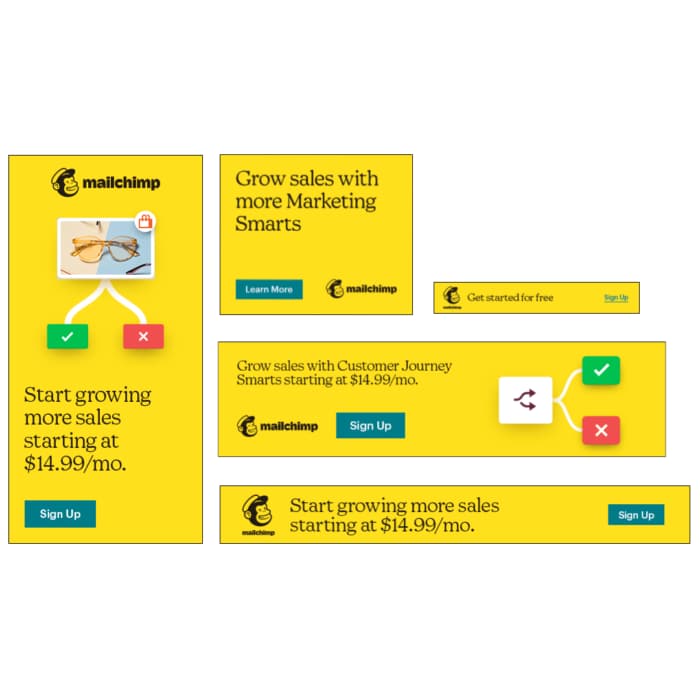
What are the most common display ad sizes?
- Medium rectangle: 300 x 250 px
- Leaderboard: 728 x 90 px
- Wide skyscraper: 160 x 600 px
- Large rectangle: 300 x 600 px
- Mobile leaderboard: 320 x 50 – 640 x 100 pixels @2X (required)
Differences between Native ads. vs. Display ads.
Meanwhile display ads are usually banners designed to stand out or “pop out” at the user, native ads are designed to blend with website’s content. When you do this right, consumers will not notice the difference between an ad or content.
| Native Ads | Display Ads |
| Static, video or animation combining text, images and videos. | Images, text and can be interactive. |
| Recommended for branded or content. | Ads vary depends on placements. |
| Ads blended into the site content, matching look and feel and format. | Ads stand out, and it’s very clear is a promotional advertising. |
| Great solution for educating | Great solution for raising awareness. |
| If you are thinking in clicks, CTR, site visitors, content reads, signups, conversions or sales | If you are looking for impressions and unique reach |
Sample of Native ads. vs. Display ads.

Display advertising is part of a full funnel strategy with the goal of attract visitors and generate traffic to a website or landing page, build brand awareness and foster loyalty. On a display advertising campaign you have to use the tools you have to target your right audience using: demographics, geo-targeting, interest, affinity audiences, etc. A success display advertising campaign should be hand by hand with search advertising. Also, always you should AB test your ads and measure your performance.
